Google Search Console Where to Upload the Verification Code on Wordpress
Themeisle content is gratuitous. When you buy through referral links on our site, we earn a commission. Learn More
Google Search Console gives you admission to a broad range of SEO tools. All the same, before you tin use Search Console, yous'll need to practise a Google site verification for your WordPress website.
Fortunately, verifying your site with Google Search Console is relatively straightforward. Y'all tin can edit your website'south files directly or utilize an external plugin. By doing and then, you can increase your site'south visibility and attract new readers to your content.
In this article, we'll explore five dissimilar methods for verifying your WordPress site with Google Search Panel. For each strategy, we'll explain step by step how to consummate the process. Here are the 5 methods that we'll cover – you can click the link to jump direct to a specific tutorial:
- Upload a file to your server
- Add an HTML tag to your site's code
- Use Google Analytics or Tag Manager
- Add a TXT record to your domain'south DNS management
- Utilise the Yoast SEO plugin
Let's get started!
1. Upload a Google site verification file to WordPress
I of the easiest ways to verify your WordPress website is by uploading a file to your server. You can exercise this with a File Transfer Protocol (FTP) client or via cPanel's File Managing director tool if your host uses cPanel.
Here's how to practise it:
First, y'all'll need to navigate to Google Search Console. Here, you'll immediately see the choice to utilize domain or URL prefix verification:
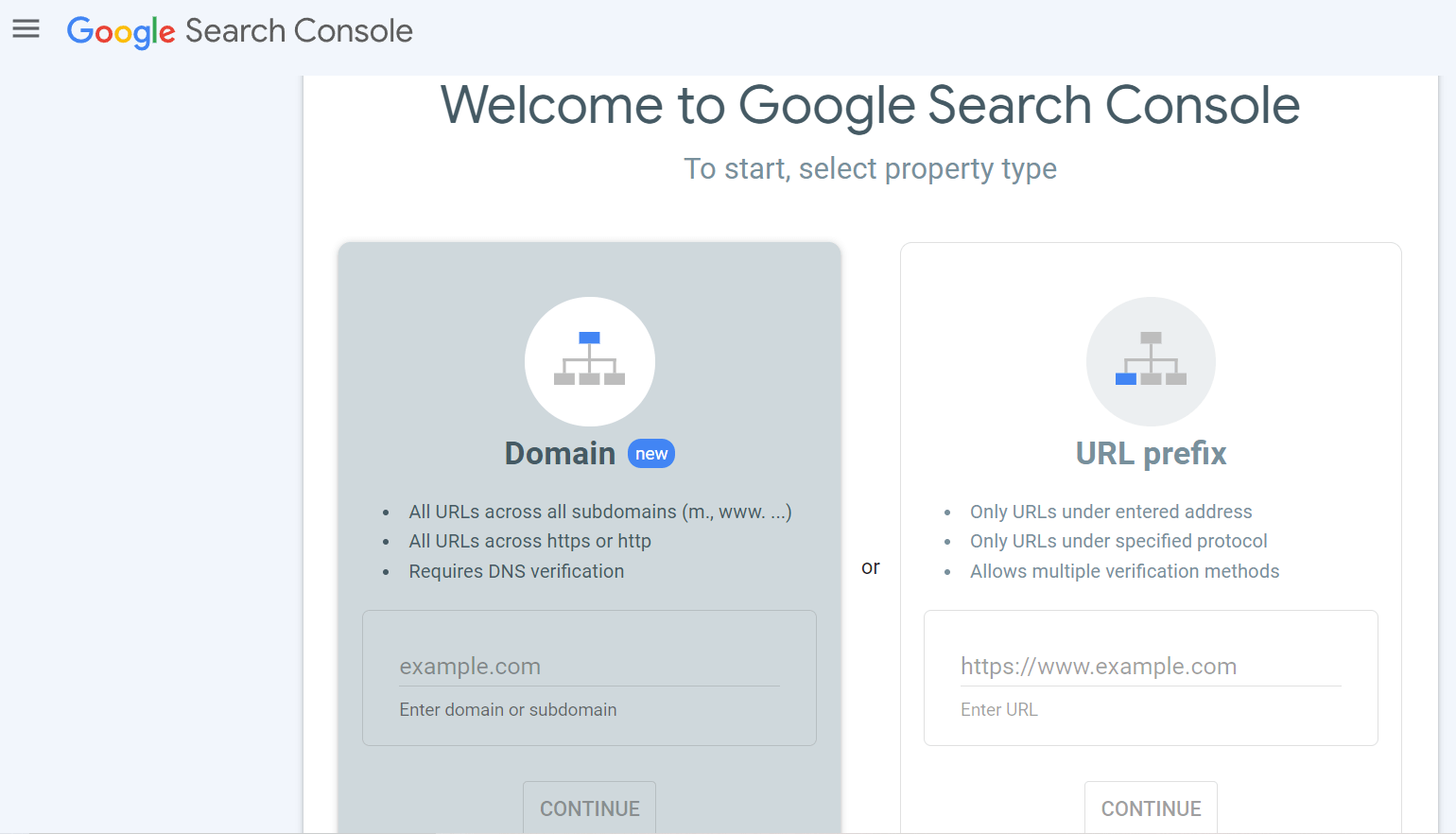
For this method, you can select URL prefix and enter your WordPress website's URL. And so, click on Go along, and you'll see a pop-up screen:
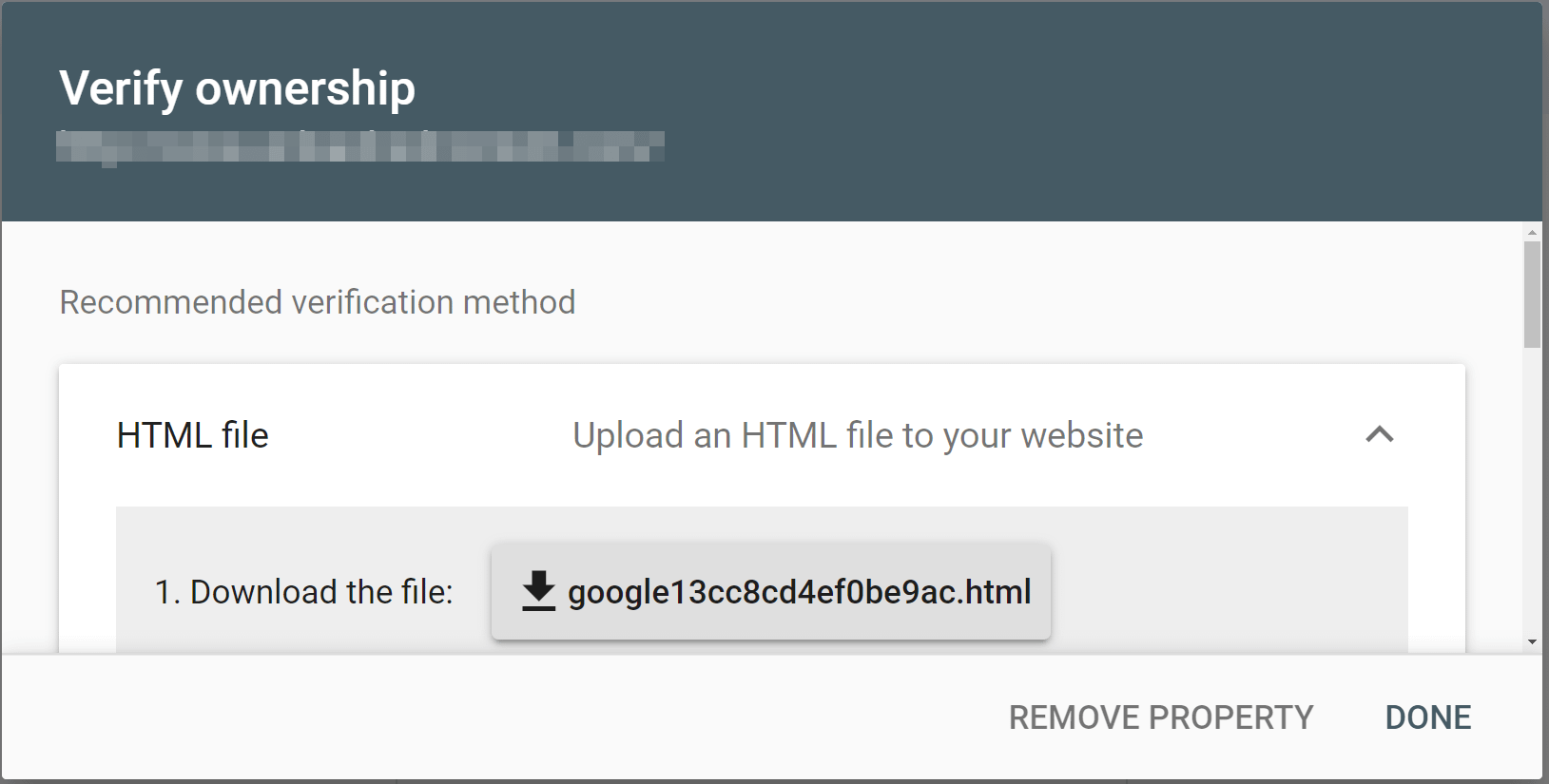
The recommended verification method is the one nosotros'll exist using for this part of the tutorial. Click on the file next to Download the file.
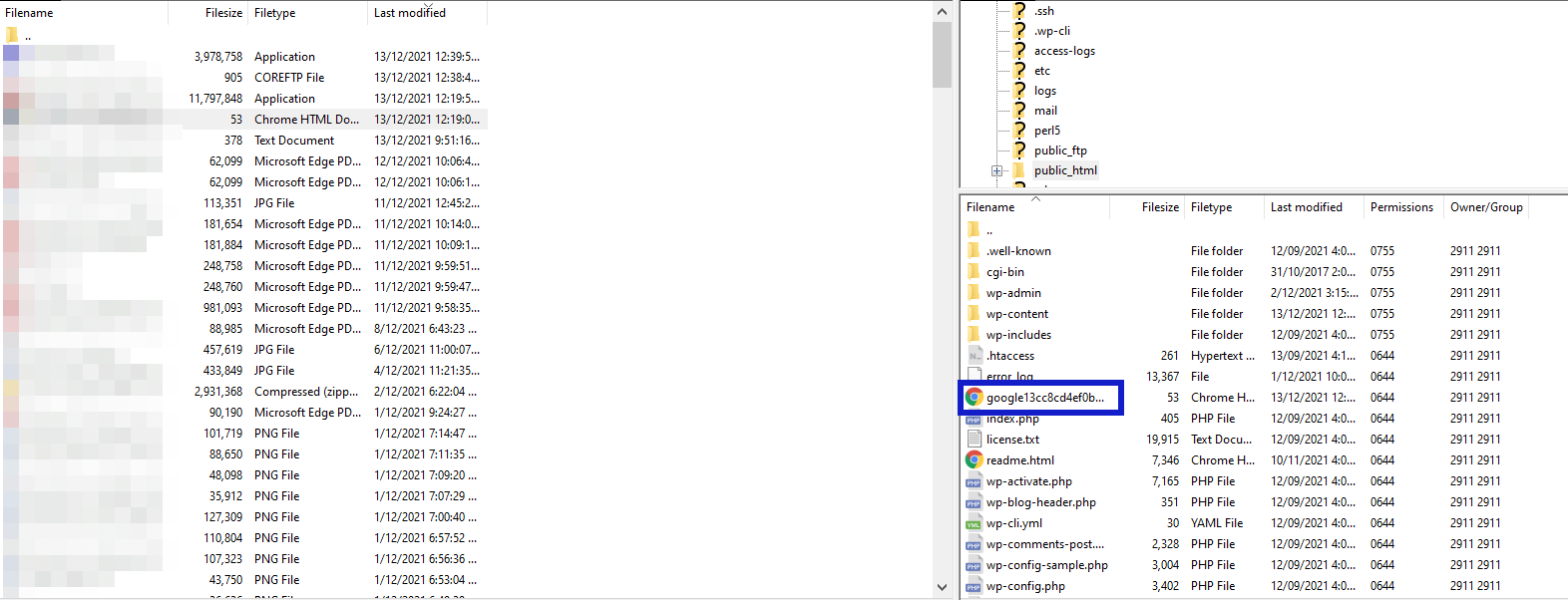
Next, open up your FTP client or cPanel's File Manager tool. If you're not sure how to connect via FTP, check out our full guide to WordPress FTP.
You'll want to discover your root folder, which is the one that holds other essential files such every bit wp-config.php. Upload the file that you downloaded from Google Console, and it volition announced in the root folder:
And so, navigate back to Google Search Panel and click on VERIFY. You should now see a success message that looks like this:
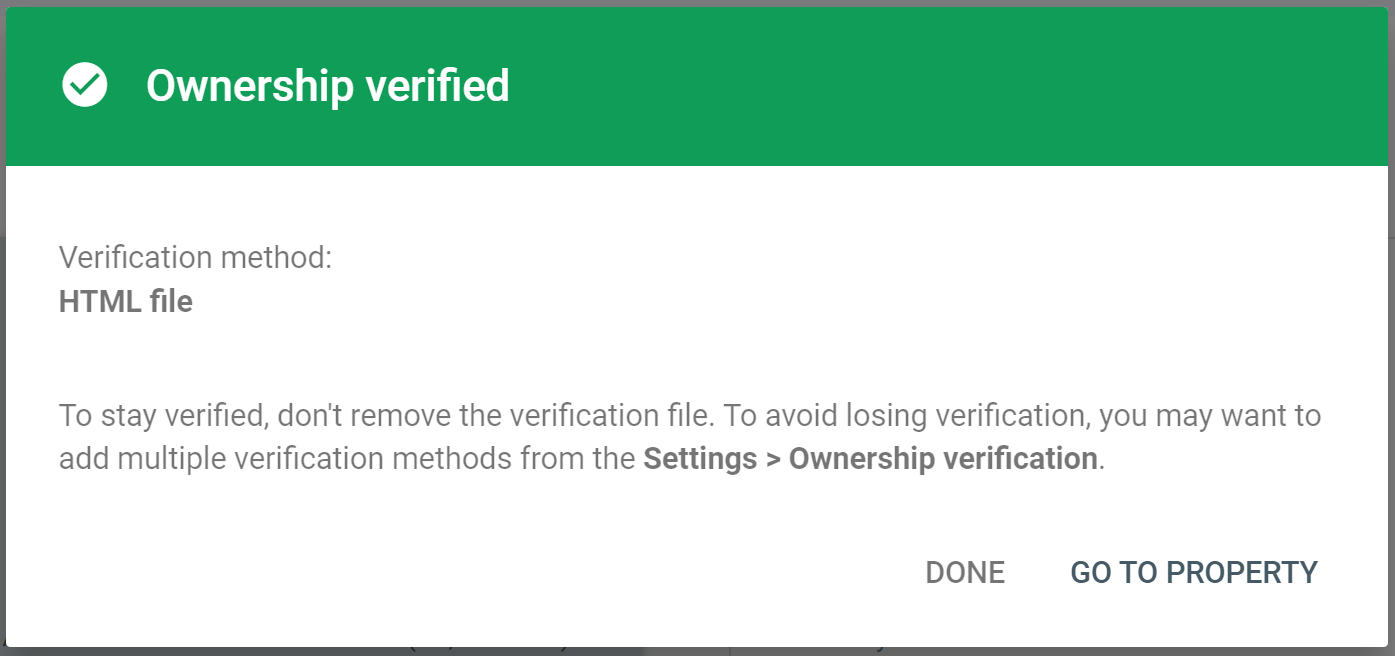
Information technology's that piece of cake! Your website is at present connected to Google Search Console.
2. Add an HTML tag to your WordPress website
Alternatively, y'all might choose to verify your site using an HTML tag. This is a small amount of code that you lot add straight to the <caput> tag in your website's files.
If you feel more comfortable with your WordPress dashboard than with an FTP client, yous might prefer to apply this method. Notwithstanding, bear in heed that this strategy involves editing one of your WordPress core files. Therefore, y'all'll want to make a fill-in of your website in instance you make any errors.
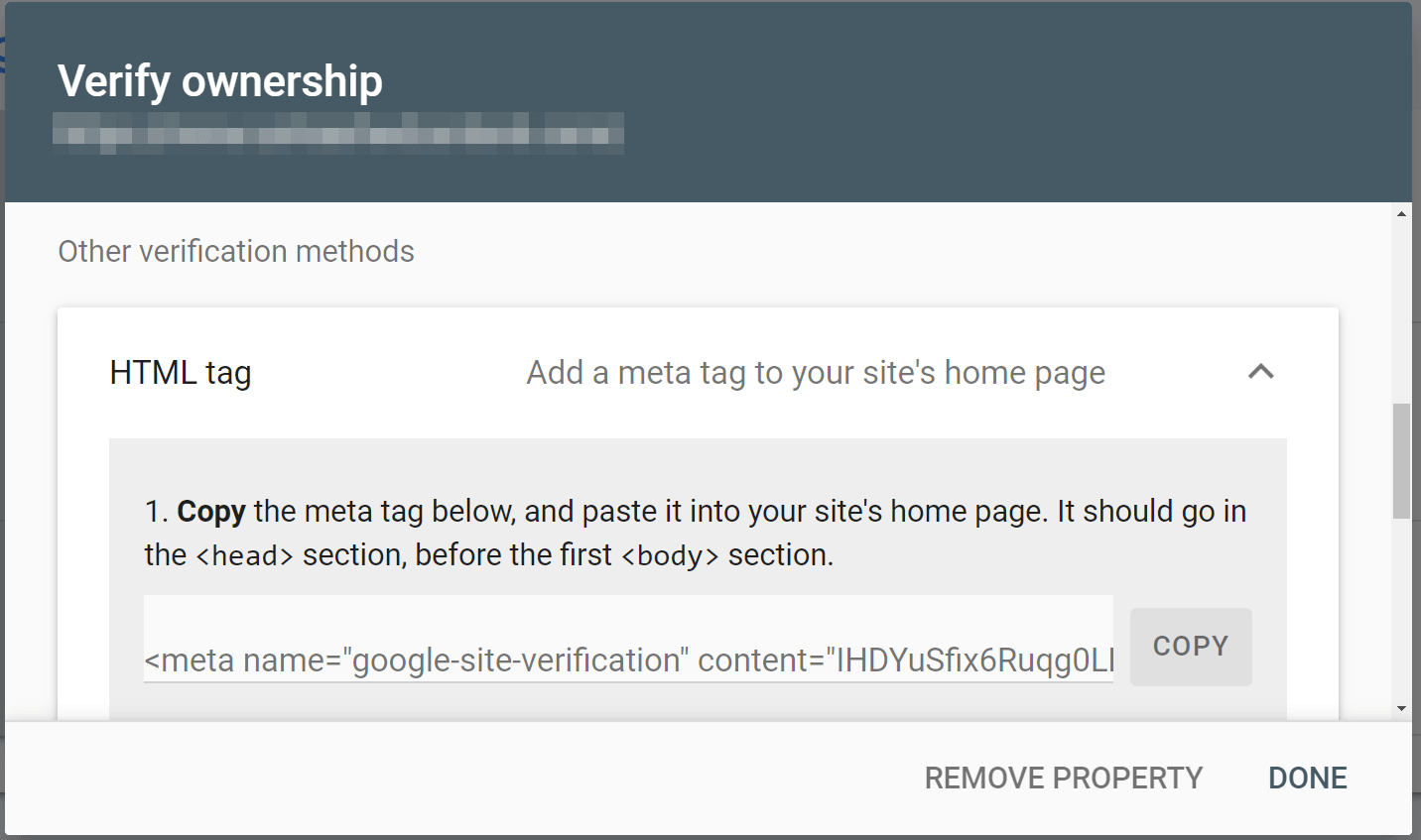
Firstly, navigate to Google Search Console, select URL prefix, and enter your site's URL. Click on CONTINUE and scroll down to Other verification methods in the pop-up box. From hither, open the HTML tag dropdown bill of fare to copy the meta tag for your website:
Next, y'all'll demand to head to your WordPress dashboard to install and activate the Insert Headers and Footers plugin.
Nosotros recommend using this plugin instead of manually editing your header file as the process is faster and y'all won't demand to create a child theme.
Once you've installed and activated the plugin, y'all can navigate to Settings > Insert Headers and Footers. Then, you tin enter the Google Search Console verification tag direct into the Scripts in Header box:
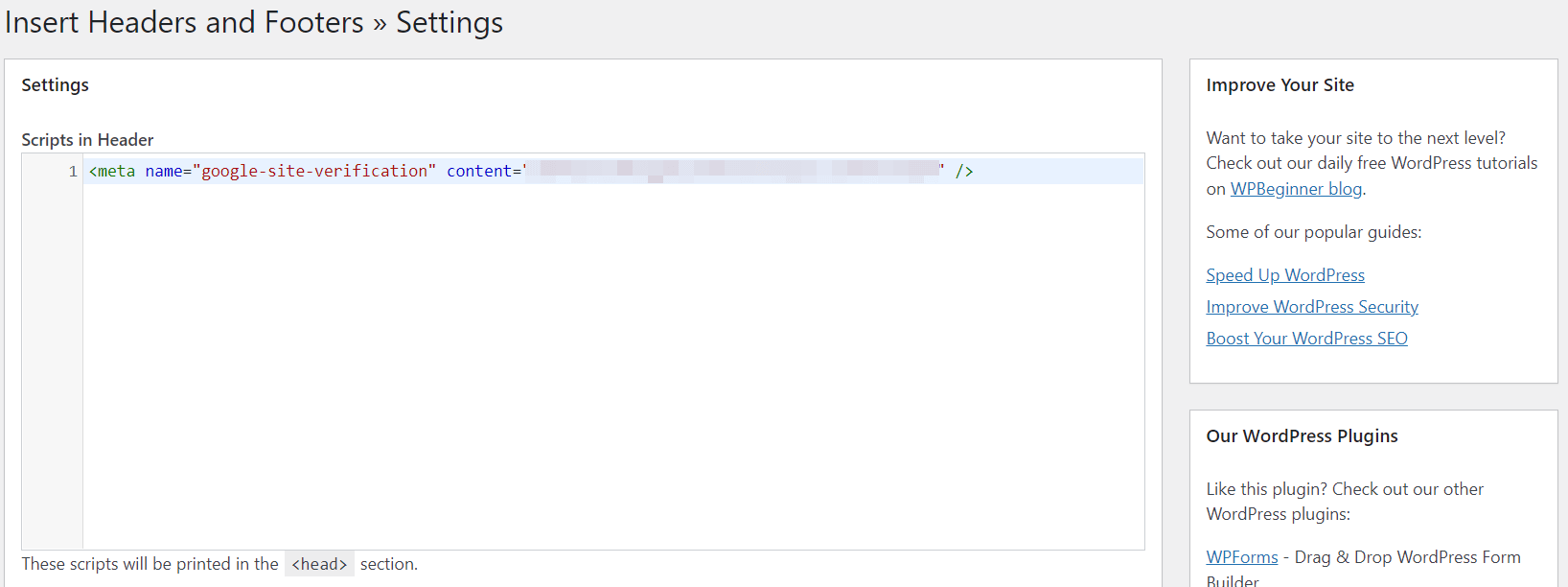
Click on Save to add the meta tag to your site's header. Then, get back to Google Search Console and select VERIFY. If your website is verified correctly, you'll encounter a green success bulletin.
3. Verify your site with Google Analytics or Google Tag Manager
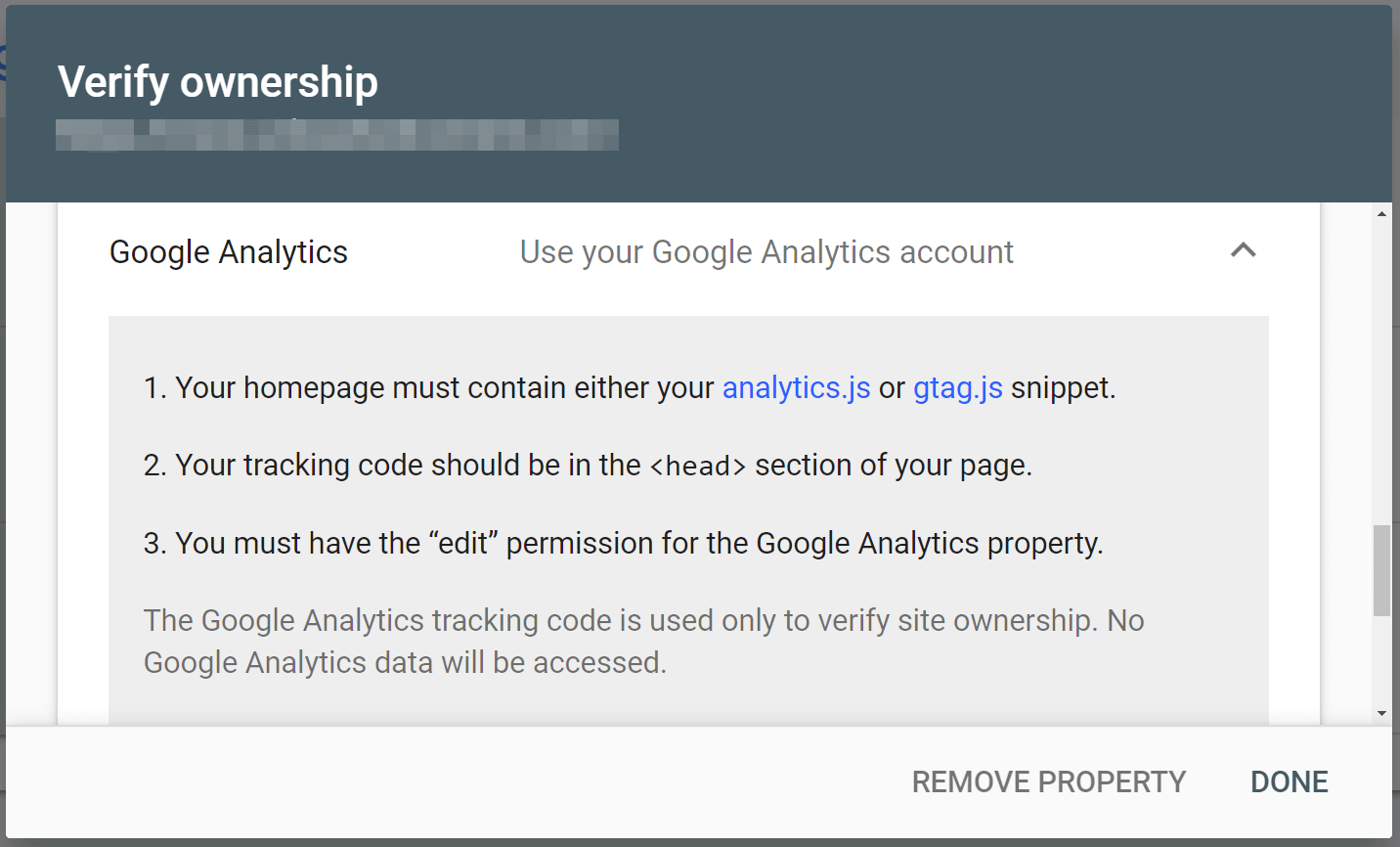
If y'all're already using Google Analytics in WordPress, this method can exist very straightforward. However, you'll need to accept a Google Analytics tracking snippet in your site'southward header section. Otherwise, this method tin exist unnecessarily time-consuming if yous just want to verify your website with Google Search Console.
Get-go, you'll need to enter your website's accost in the URL prefix box on Google Search Panel's welcome screen. Afterwards yous select Keep, scroll downwards the pop-upward box to find the Google Analytics dropdown option:
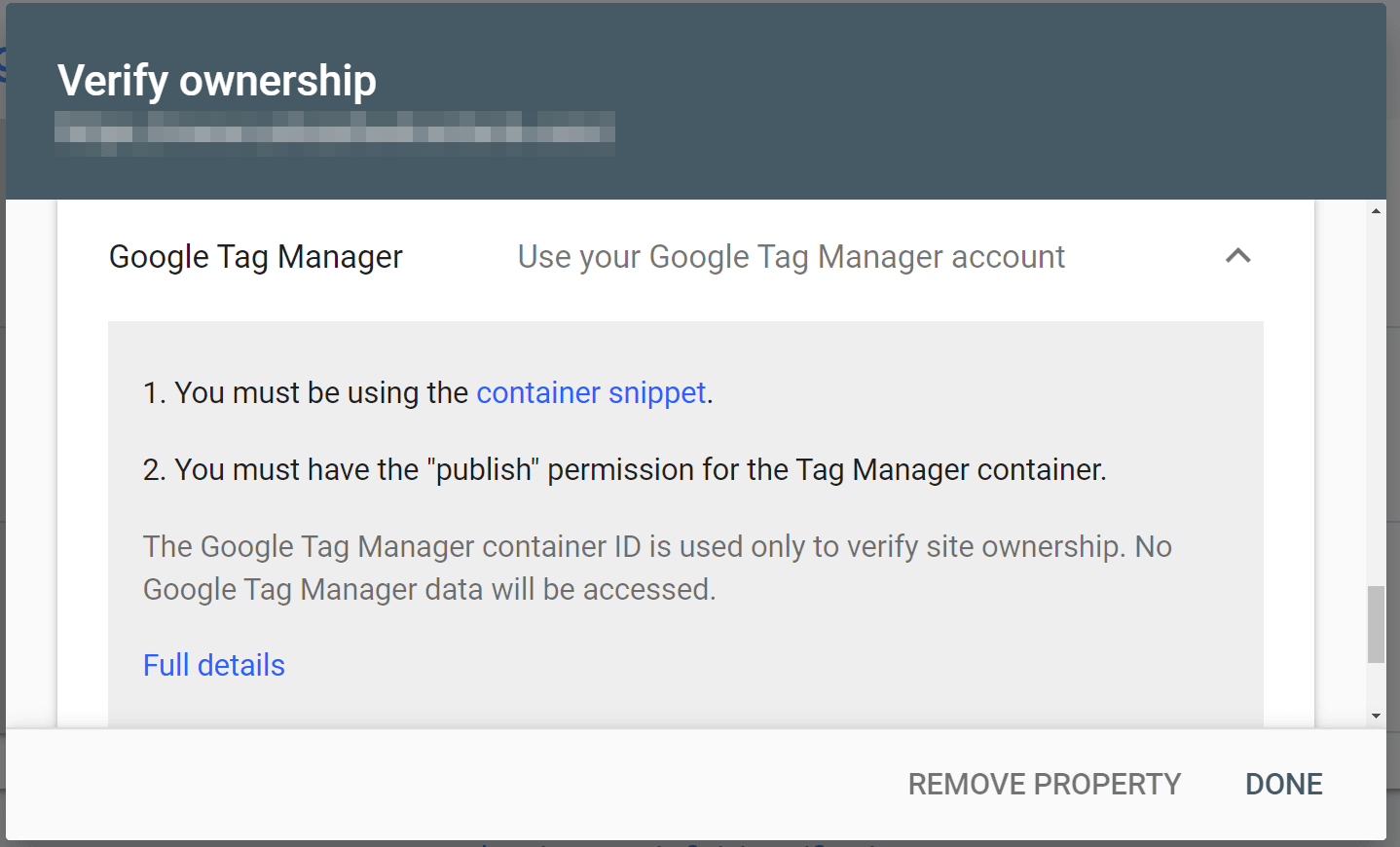
In a similar vein, yous can verify your WordPress website with Google Tag Manager. However, you'll need to ensure that yous take the container snippet in your existing site, or this method won't work:
Simply click on VERIFY, and Google Search Console will scan your website for the corresponding code. If the verification is successful, you'll come across the confirmation screen after a few seconds.
iv. Add a TXT tape to your DNS configuration
All of the methods we've just discussed use the URL prefix verification. Yet, you tin as well verify your WordPress website with the Domain method. You might prefer to utilise this pick if you have subdomains or a mixture of URLs across both HTTP and HTTPS.
When you open the Google Search Console welcome page, select Domain, enter your website'southward URL, and click on CONTINUE. You lot'll at present see a TXT record specific to your site:
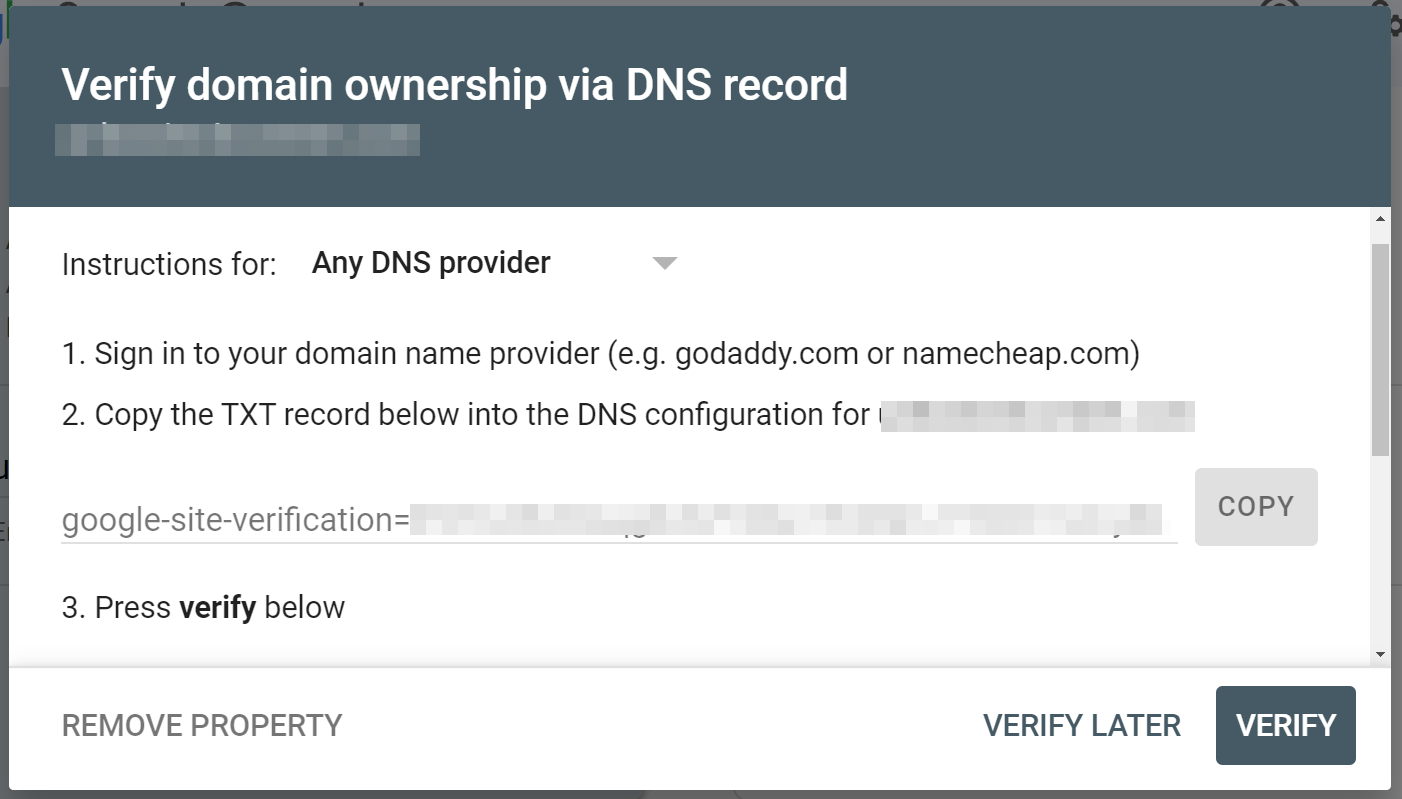
You can choose your DNS provider from the dropdown menu to see more than specific instructions. Then, copy your TXT record and navigate to the location where you manage your domain'due south DNS.
Where you manage the DNS will depend on how you've configured your domain proper noun. Here are some possible options:
- Hosting command panel – if you've pointed your domain name to your web hosting by changing your domain's nameservers to your host'south nameservers, you'll need to make these changes via your hosting dashboard.
- Cloudflare – if you're using Cloudflare, you lot'll make these changes via the Cloudflare dashboard.
- Domain registrar – this is the least likely state of affairs. Still, if you left your DNS management with your domain registrar and pointed your domain proper noun to your hosting using an A record instead of changing nameservers, you might need to manage your DNS from your registrar.
In most situations, you'll utilize your hosting dashboard (unless you're using Cloudflare).
For this walkthrough, we'll prove you how to change your DNS record with Bluehost.
From your control console, navigate to Domains and find the name of the WordPress website that yous want to use in Google Search Console. Then, click on the dropdown carte du jour pointer and select DNS from the bachelor options:
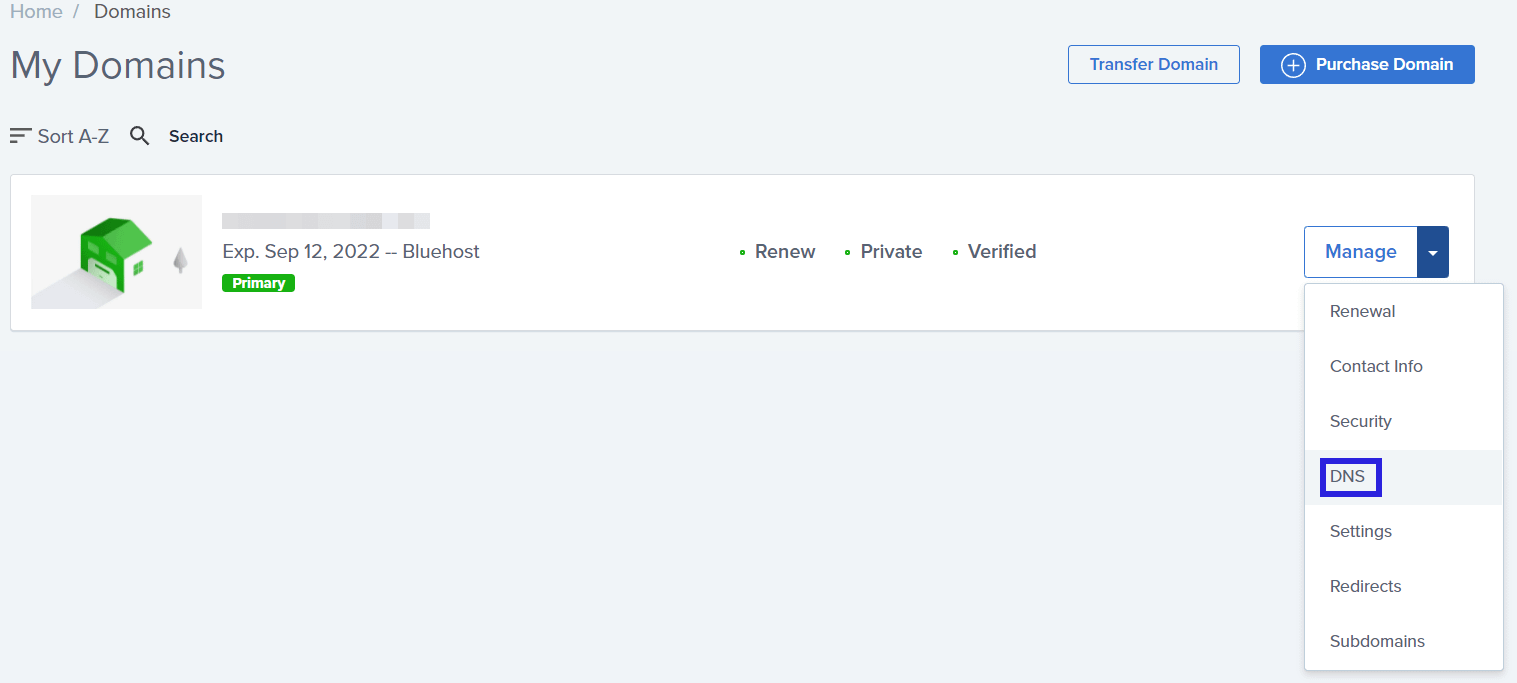
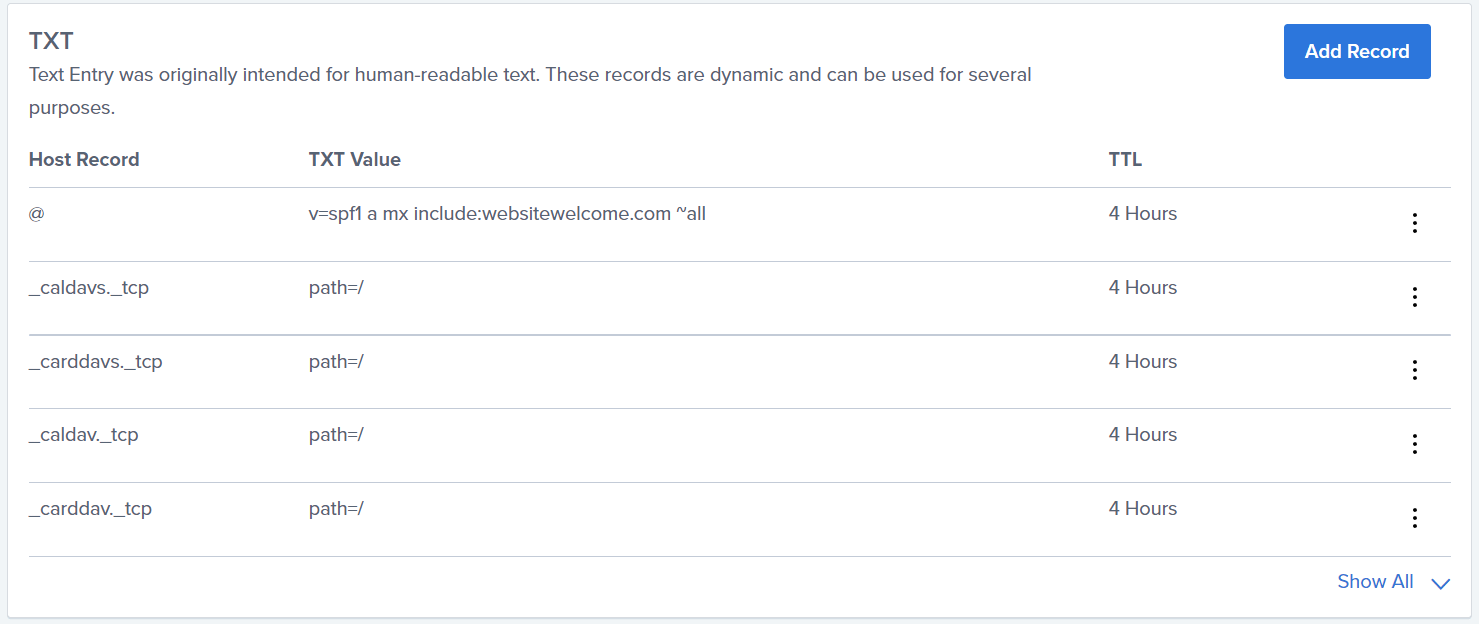
Curlicue downward the page until you lot find the TXT section. Here, you'll need to click on Add Record to upload the TXT record for Google Search Console verification:
Y'all'll now come across a few different boxes to enter data. Paste your TXT tape into the TXT Value box:
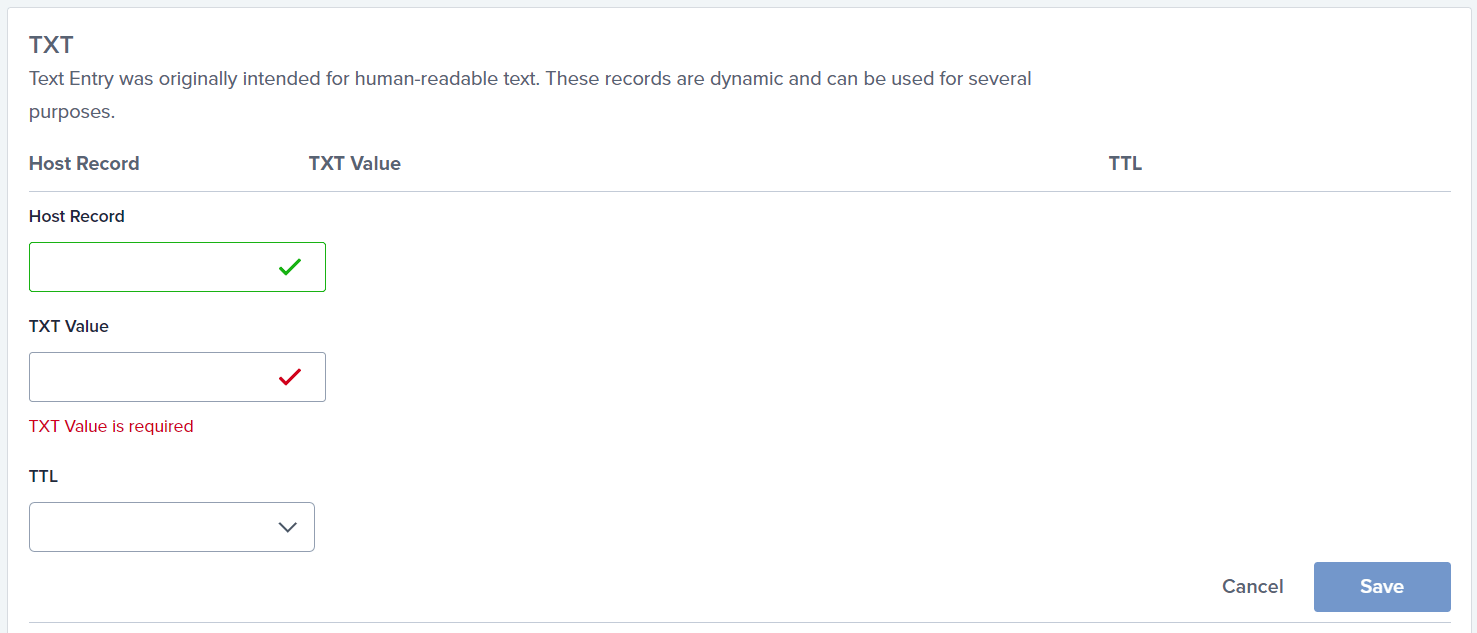
You can also choose a Time to Live (TTL) value from the dropdown menu. TTL acts similar a timestamp that determines how long a packet of information will be earlier information technology is automatically discarded. You can choose a TTL value from four hours (the default) to vii days.
Once you're happy with all your entries, click on Save. Then, navigate back to Google Search Console and hit the Verify button to meet if the platform registers your DNS record.
Your website's DNS record might not verify immediately. It can take anywhere from a few minutes to a few days for your records to update completely. Therefore, if yous have a little time, you might want to return to Google Search Panel in one day to see if your website is now verified.
v. Use the Yoast SEO plugin
Finally, yous can utilize the Yoast SEO plugin to verify your WordPress website. This SEO plugin enables you to optimize your content for search engines and man readers. Furthermore, this tool can help verify your website directly from WordPress.
Get-go, you'll demand to copy your HTML tag verification code from Google Search Console. Yous tin can find it by post-obit the instructions from the 2nd method in this walkthrough guide.
Adjacent, head to SEO > Full general > Webmaster Tools in your WordPress dashboard. You lot tin can so paste your HTML tag in the Google verification code box:
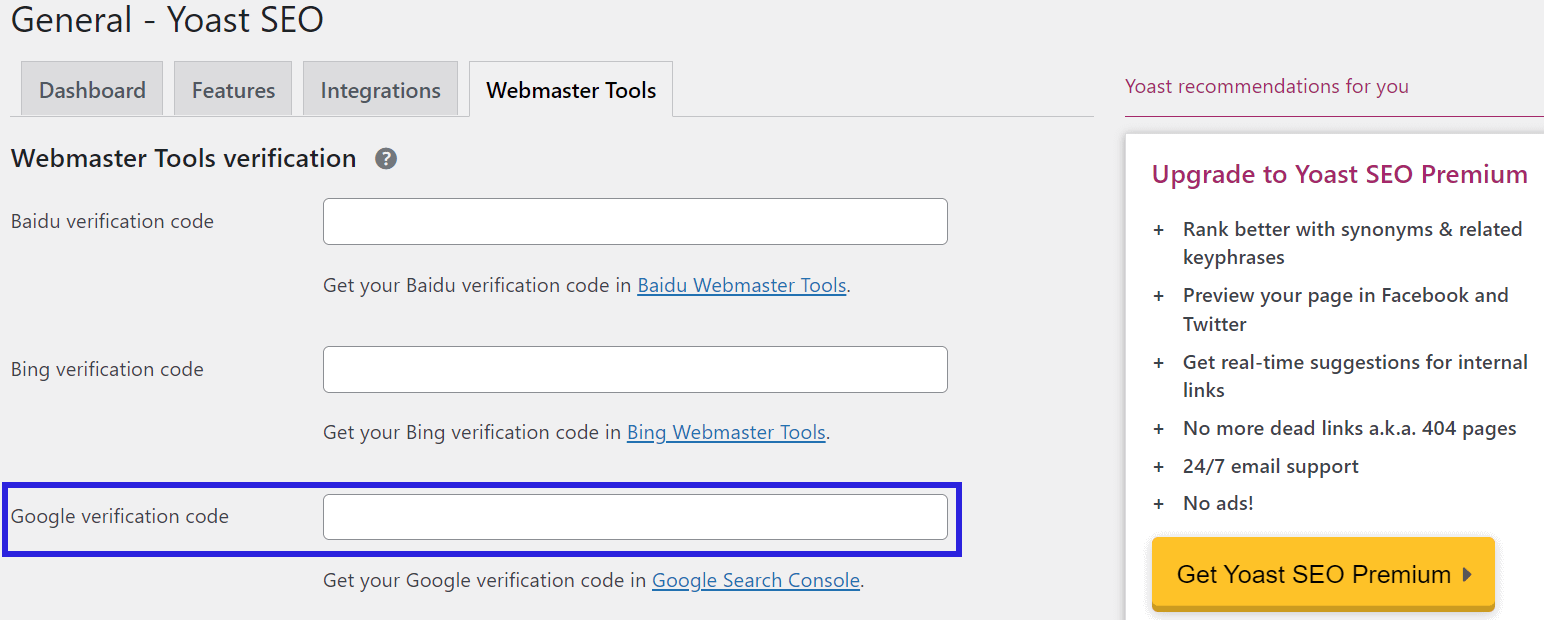
In one case you lot've pasted the lawmaking, click on Save Changes. Then, return to Google Search Console and hitting the VERIFY button. Yous should now see a greenish success message confirming your website's verification.
Get started with Google Search Console
Google Search Console is an invaluable platform when optimizing your website for search engines and human readers. However, you lot'll first demand to verify your site before you tin start using the various SEO tools. Fortunately, you can use multiple methods to verify your site with minimal effort.
To recap, these are the 5 methods of Google site verification for WordPress websites:
- Upload a Google site verification file to WordPress.
- Add an HTML tag to your WordPress website.
- Verify your site with Google Analytics or Google Tag Director.
- Add together a TXT tape to your DNS configuration.
- Use the Yoast SEO plugin.
If you want to integrate your site with other Google services, yous tin can besides use Google'southward official Site Kit plugin. Check out our Google Site Kit tutorial for more details.
Once yous've added your site, we also accept a guide on how to submit a sitemap to Google Search Console.
Practise you accept any questions virtually Google site verification for WordPress websites? Allow us know in the comments department beneath!
Free guide
5 Essential Tips to Speed Up
Your WordPress Site
Reduce your loading time past even 50-80%
just by following simple tips.
Download free guide
Source: https://themeisle.com/blog/google-site-verification-wordpress/
0 Response to "Google Search Console Where to Upload the Verification Code on Wordpress"
Post a Comment